
Beyond the Mortgage: The Real Cost of Owning a Home in Houston (Taxes, MUDs, and Insurance)
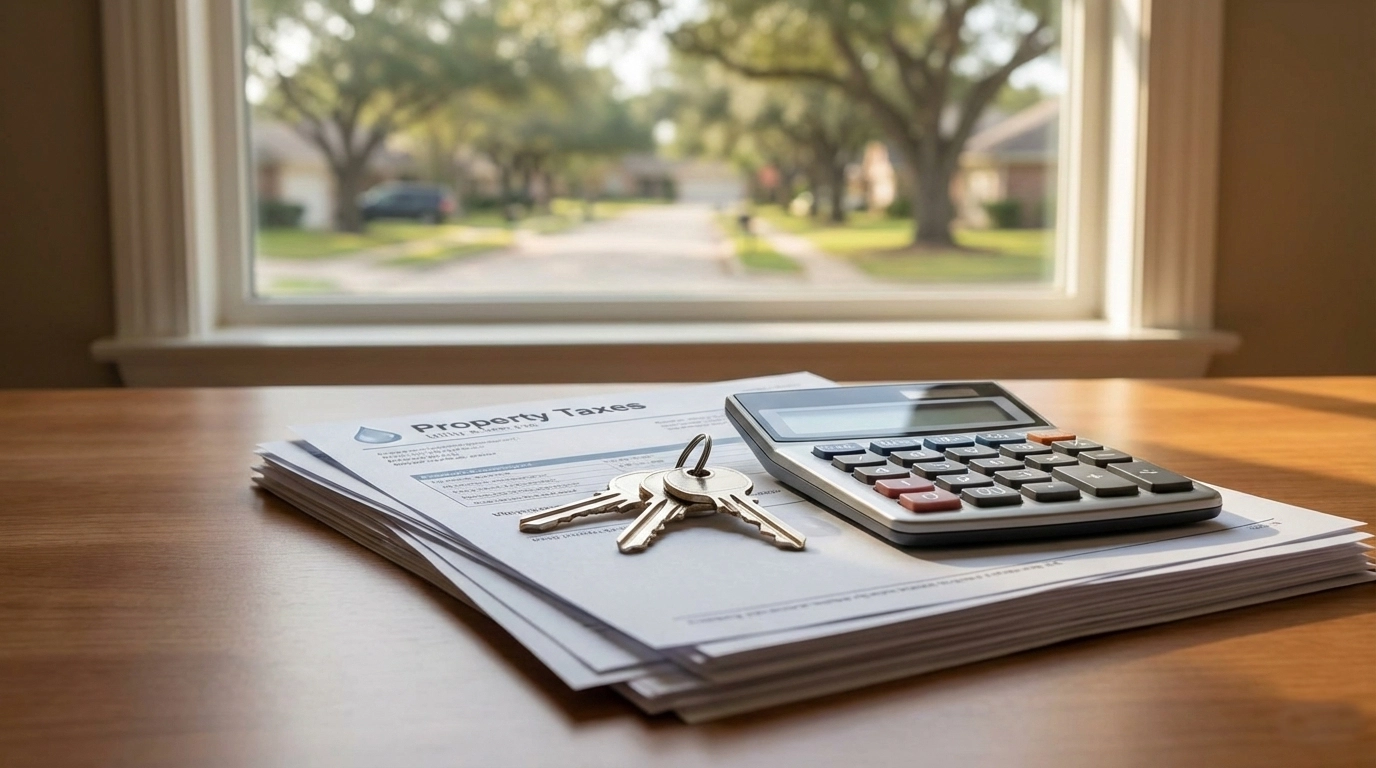
When most people budget for a home, they focus on one big number: The Interest Rate.
While the rate is important, it is only one piece of the puzzle. Texas is unique. We don’t have a state income tax, which is great for your paycheck, but the state makes up for that revenue through property taxes.
At Cousin Group, we hate surprises. We want our clients to know exactly what their monthly payment will look like before they fall in love with a house. Here is your guide to the three “hidden” costs of Houston real estate that every buyer needs to understand for 2026.
1. The Reality of Property Taxes
In the Greater Houston area, property tax rates can vary significantly depending on the exact location of the house.
- The Range: You might see tax rates as low as 1.8% in older, established neighborhoods, or as high as 3.2% – 3.6% in brand-new developments.
- The Math: On a $400,000 home, the difference between a 2% tax rate and a 3% tax rate is $4,000 a year (or roughly $333 extra per month).
The “Pro” Tip: Homestead Exemptions The good news? If you buy a home and make it your primary residence, you qualify for a Homestead Exemption. This significantly lowers the taxable value of your home for school district taxes. It also caps how much your taxable value can rise each year (currently capped at 10%), protecting you from massive spikes in your bill if property values soar.
2. What on Earth is a “MUD”?
If you are looking at new construction or homes in suburbs like Katy, Fulshear, or Cypress, you will likely see a line item for a M.U.D. Tax (Municipal Utility District).
What is it? When developers build new neighborhoods outside of city limits, there are no city pipes for water and sewage. The developer creates a MUD to fund that infrastructure.
What you need to know:
- Higher Rates Initially: MUD taxes are why new homes often have higher total tax rates (often pushing that 3%+ range).
- It Decreases Over Time: As the neighborhood develops and the MUD bonds are paid off, this tax typically decreases.
- The Benefit: You get newer infrastructure and amenities, but you need to budget for that higher monthly payment in the early years.
3. Flood Insurance: Do I Really Need It?
This is the most frequently asked question we receive. “The map says I’m not in a flood zone. Can I skip the insurance?”
Our Advice: No. In Houston, water is a constant presence in life. Being outside a “High-Risk Flood Zone” (often called the 100-year floodplain) just means your lender won’t require you to have insurance. It does not mean you are safe from flooding.
- The Cost: If you are not in a high-risk zone, flood insurance is often very affordable (sometimes just a few hundred dollars a year).
- The Risk: Standard Homeowners Insurance does not cover flood damage. Without a separate flood policy, rising water damage comes out of your pocket.
- The Strategy: Treat flood insurance like a seatbelt. You hope you never use it, but considering the low cost versus the high protection, it is a non-negotiable safety net for Houston homeowners.
Summary: calculate the “PITI”
Don’t just ask “What is the price?” Ask “What is the PITI?”
- Principal
- Interest
- Taxes (Property + MUD)
- Insurance (Homeowners + Flood)
When you consider the total PITI, you get the actual monthly cost.
Confused by the numbers? We can help you run the math on any property in Houston. Whether you are looking at a historic bungalow or a brand-new build with a MUD, Cousin Group will help you estimate your true monthly payment so you can buy with confidence.